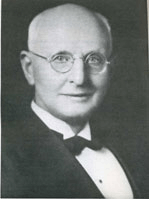
Perhaps if the Internet had been around in Dr. Weston A. Price's day, more people would have heard and heeded his message. Who know how many countless lives would have been saved and spared terrible illnesses?
The fact is that we are dying of malnutrition. There are those in the medical community that would have us believe that we are healthier than people have ever been, but it is not true. Humans today are far unhealthier than most humans who have lived in most any place in the world more than 150 years ago.
Dr. Weston A. Price saw it changing back in the 1930’s and tried to warn the world. He was a successful dentist practicing in Cleveland, Ohio in 1935, when he became very concerned at the rapid rise of terrible dental problems, massive tooth decay and even serious deformities of the face and jaw in many, if not most, of the children who were now coming to his office. There were major changes from their parent’s generation. And bad health was always closely linked to these people with dental problems.
So Dr. Price decided to do a lengthy study that took him around the world for several years, to find out why the health of the people in America was declining.
He had a theory that it was the introduction of modern processed foods that was causing the decline, but I think even he was amazed at what he found out. For several years he studied thousands of people all over the world. He was particularly interested in comparing people who were still living in their traditional culture, relatively untouched by modern life, and people of the same racial stock who had adapted modern foods and ways.
He wrote a fascinating book on his findings, which fortunately has been saved and is still being published for us by a foundation called The Price-Pottenger Nutrition Foundation ( http://www.price-pottenger.org ). This foundation was created after his death to save his research so that it will be available to us, and so the world will not forget it.
There is not room in this article to explain all his intensive scientific research and findings, but some of the things he found flys in the face of what the medical community is still telling us about nutrition today.
He found that people who lived traditionally, no matter where they were in the world, were of far superior health. They had perfect teeth and almost no tooth decay (and they didn’t even brush!) They were strong, mentally alert, and free from deformities. They didn’t suffer from heart disease, cancer, or obesity-- the plagues of modern society. But when they adapted a modern diet with white flour, white sugar, white polished rice, processed oils, powered milk and canned goods, they rapidly declined in health. They became quickly susceptible to diseases and their children suffered from terrible deformities.
He carefully studied each of the traditional diets and compared them to each other and to modern diet, to find out what we were lacking. Some of the things that all the traditional diets had in common besides not eating our processed foods were:
1) They ate whole foods, such as freshly ground whole wheat flour or oats.
2) They ate a much higher ratio of saturated fats than we do. The diets of the healthiest people all over the world contained 10 times the nutrients found in saturated fat than the American diet of his day. (And ours is even lower now!)
3) They ate fresh fruits and vegetables when they could get them.
4) They ate a lot of naturally fermented foods and drinks, such as cheese, yogurt, sauerkraut, and homemade low alcohol beer.
The Weston A. Price Foundation ( http://www.westonaprice.org ), another nonprofit organization dedicated to spreading the word about Dr. Price'
s findings, believe "that modern technology should be harnessed as a servant to the wise and nurturing traditions of our ancestors rather than used as a force destructive to the environment and human health; and that science and knowledge can validate those traditions."
Check into the solid research these two foundations offer. It may just the information you need to move you and your family towards a happier, healthier lifestyle.
By Dianne Ronnow © 2006 Mohave Publishing. All rights reserved.
The rise in obesity in America has reached epidemic proportions. If you need some extra help changing your diet to promote healthy weight loss, check out my site at http://coconut-oil-diet.com today! And for information about a new healthy diet aid that is safely helping thousands of people lose weight, go to http://powerdietpatch.com now!
This article may be freely copied as long as it is not modified and the resource box accompanies the article, together with working hyperlinks.
Read more on this article...
Here is an article by Dr. Joseph Mercola, found at http://www.mercola.com/2003/sep/13/coconut_oil.htm. Dr. Mercola's site is the top alternative medicine information resouce on the web.Coconut oil is truly the healthiest oil you can consume. It is rich in lauric acid, which is known for being antiviral, antibacterial and antifungal, and contains no trans fat (even olive oil has some trans fat). You can even use it on your skin to help prevent wrinkles.
Unfortunately, there is a widespread misconception that coconut oil is bad for you because it contains saturated fat. To really understand the benefits of coconut oil, I suggest you read Dr. Mary Enig and Sally Fallon's article "The Truth About Saturated Fat" to first dispel any lingering notions you may have that all saturated fats are dangerous.
Fats are categorized as either short-, medium-, or long-chain depending on how many carbon molecules they contain. Close to two-thirds of the saturated fat in coconut oil is made up of medium-chain fatty acids, which have antimicrobial properties, are easily digested by the body for quick  energy, and are beneficial to the immune system. Far from being dangerous, the saturated fat in coconut oil is actually health promoting.
So how could an oil that is so good for you have gotten such a bad reputation? The answer comes down to simple economics and politics. Based on some flawed studies performed over four decades ago, some of which used primarily hydrogenated coconut oils, a powerful anti-saturated fat movement began. Remember--hydrogenated oils are oils with trans-fatty acids, which have been altered from their original chemical composition and have been shown to raise cholesterol levels and lead to heart disease and other health problems. You should not consume hydrogenated oils, whether it is coconut or another vegetable oil.
Around this time the edible oil industry began to denounce all saturated fats and heavily promote polyunsaturated fats such as canola, soybean, safflower, corn, and other seed and nut oils. However, these oils easily become rancid when exposed to oxygen and produce large amounts of damaging free radicals in the body. What is not commonly known is that these oils can actually cause aging, clotting, inflammation, cancer and weight gain. You can read the article "Secrets of the Edible Oil Industry" for more information.
Fortunately, coconut oil has begun to gain some positive media exposure as researchers realize its health-promoting qualities. However, coconut oil can vary widely in terms of the types of coconuts used, the manufacturing processes used to make the oil, and more, and all of these factors play a major role in the effectiveness of the oil.
Most commercial coconut oils are RBD (refined, bleached, and deodorized). RBD oils do contain the medium chain fatty acids, however they also contain chemicals used in processing.
Because of these variations my team and I here researched coconut oil extensively until we found the ideal source. I now highly recommend and offer you what is clearly the premier brand of virgin coconut oil in the United States, Tropical Traditions. This virgin coconut oil is not only certified organic, but it also met all our other requirements, including no GMO ingredients, bleaching, deodorizing, refining or hydrogenation. Tropical Traditions also uses fresh coconuts (not "copra" or dried coconuts like most oils) that come from a rural region of the Philippines untainted by urban pollution.
I urge you to try this virgin coconut oil and experience the health benefits for yourself. If you do choose another brand, please be sure that it meets these requirements.
For more coconut oil information by Dr. Mercola go to: http://www.mercola.com/products/coconut_oil.htm
To find out what the secrets of coconut oil diets and weight loss are see Dianne's FREE ebook at http://coconut-oil-diet.com now!
Read more on this article...

Now that food manufacturers in the US have to label their trans-fat content, some of them are switching to healthier oils like palm and coconut. I am happy to see this change for the better! A good example is Skippy's new Naturals brand of peanut butter. I hope more products continue this trend.
Undoubtedly, there will be ignorant people who will cry out that palm oil is an unhealthy saturated fat. Like coconut oil, palm oil has been mislabeled as unhealthy for far too long, when it is actually is a very healthy saturated fat. Both oils have been staples in the diets of tropical people for thousands of years, and have helped people stay lean and healthy for centuries.
Like coconut oil, palm oil is great for baking and frying, and is very stable and solid at room temperature, so it does not require hydrogenation and contains no trans fatty acids. (Trans fat is the bad stuff that you want to avoid like the plague!)
Palm oil is the second most used dietary oil in the world, behind soy oil, and much healthier for you than soy oil. It comes from a different palm tree than coconuts-- a palm tree in Africa that produces small fruits that contain the palm oil. Palm oil is redish orange colored in it's natural (unprocessed) state and a rich source of carotenes and and one of the best sources of vitamin E.
Unprocessed palm oil does have a bit of a strong taste that (for Americans) takes a little getting used to. (I use it when I cook fish, because my family doesn't notice the small flavor difference with the strong fish flavor covering it.) Processed palm oil has the flavor removed, but so are some of the nutrients. But even then, it is still much better for you than soy or canola oil.
I think it is high time Americans see what most of the rest of the world already knows, that switching to palm and coconut oil is definately a change for the better!
For more information on coconut oil check out my free ebook online at http://coconut-oil-diet.com now!
For more information on palm oil, or if you want to purchase it, go to http://www.tropicaltraditions.com/red_palm_oil.htm
For coconut oil diet recipes, go to my blog at http://coconut-recipes.blogspot.com
Read more on this article...
These statements have not been evaluated by the Food and Drug Administration. Not intended to diagnose, prescribe for, treat or claim to prevent, mitigate or cure any human disease. The third party information referred to herein is neither adopted nor endorsed by this web site but is provided for general informational purposes.
This site is protected by international copyright law. You may not otherwise resell, reproduce, distribute, publicly perform, publicly display, or create derivative works of this material, unless authorized by the owners. Copyright 2009. All Rights Reserved.
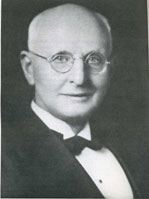 Perhaps if the Internet had been around in Dr. Weston A. Price's day, more people would have heard and heeded his message. Who know how many countless lives would have been saved and spared terrible illnesses?